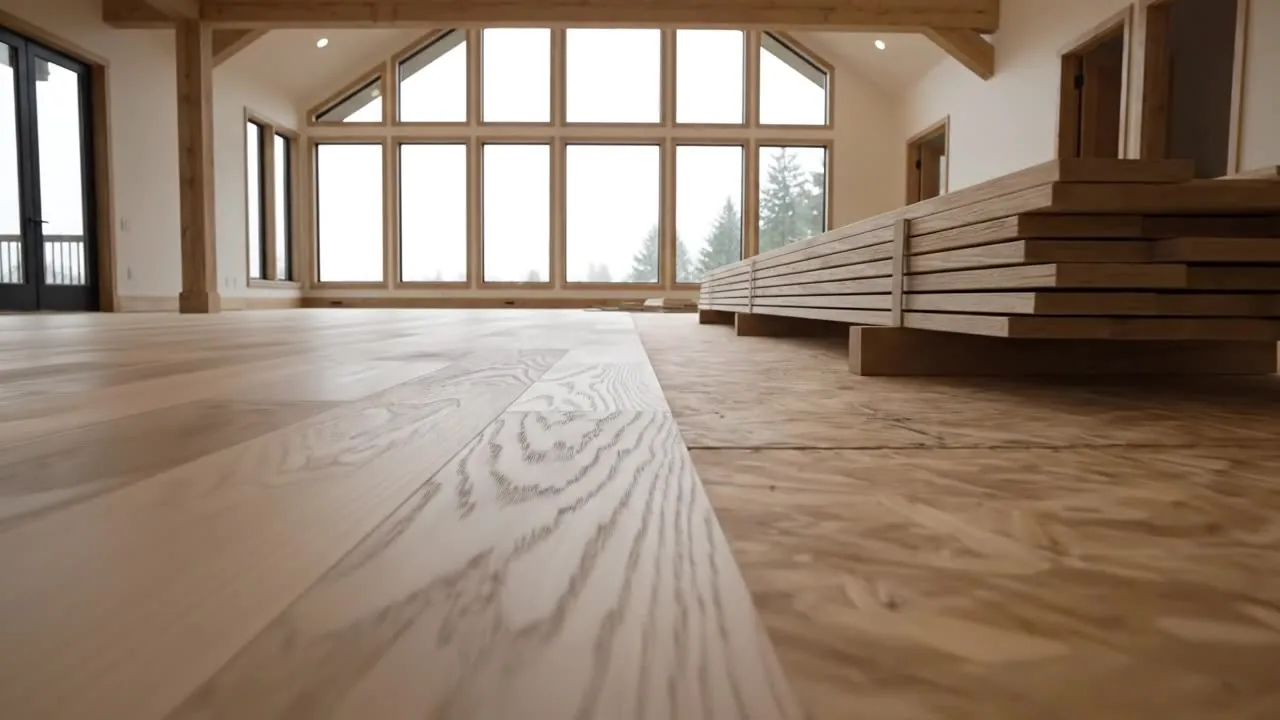
Hardwood Floor Installation, Seattle to Lake Stevens
New floors in oak, fir, maple, engineered and prefinished, for homeowners and for builders who need the flooring guy to show up when he said he would.
Priced by the square foot, quoted in writing. Moisture barrier on every job, and three coats on anything we finish on site.
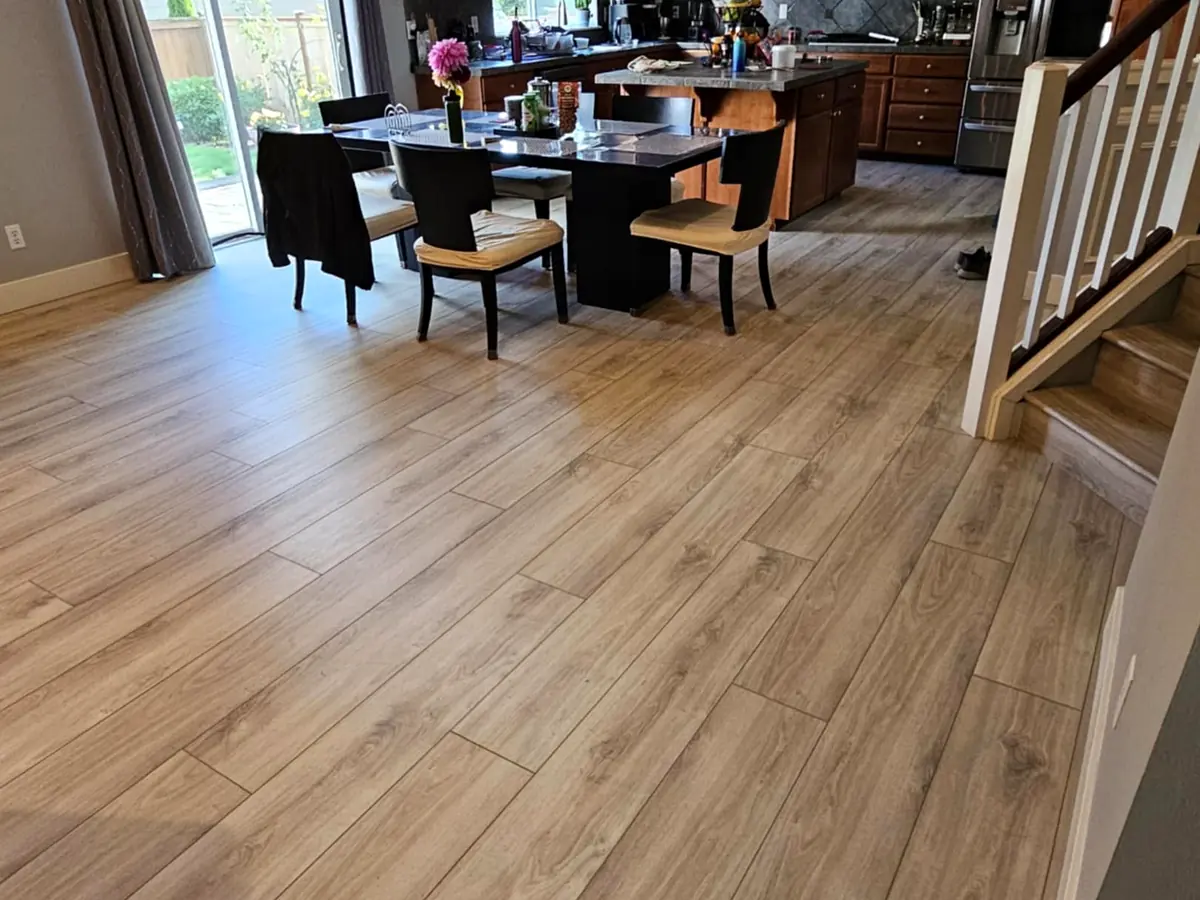
We install oak, fir, maple, engineered and prefinished hardwood across the Greater Seattle area. Prefinished and engineered mean less sanding and usually one visit, while unfinished boards get sanded and finished in your house after they go down. Every installation gets a moisture barrier matched to the plank width, and anything finished on site gets three coats. The estimate is free, in your home, and usually within two or three days of your call.
What we install
Oak is the number one wood and it is most of what goes down. There is a fair amount of fir around here too, native to the Pacific Northwest and common in older Seattle homes. Maple and the engineered products fill in from there.
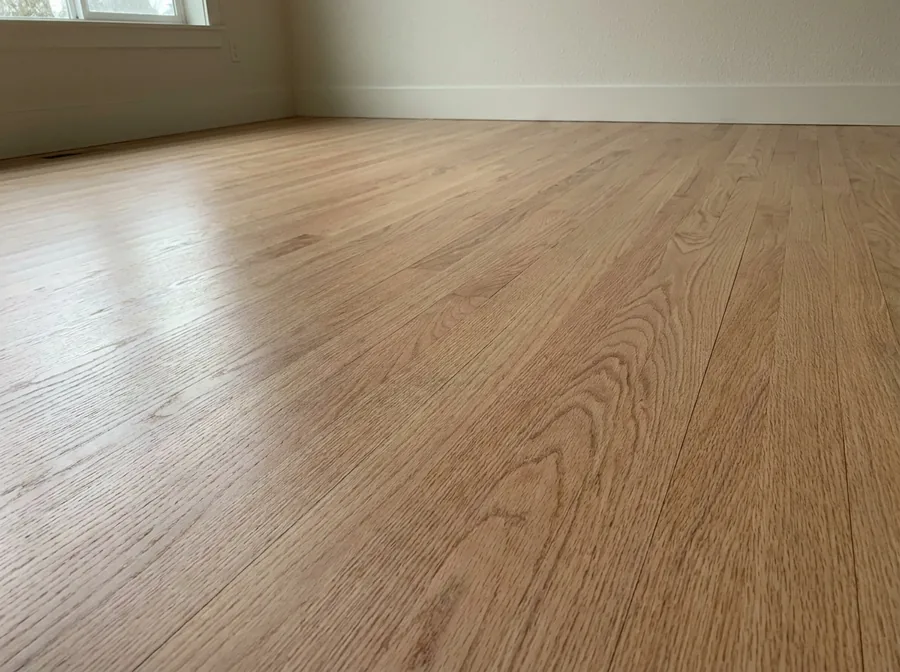
Red and white oak
The number one wood, and most of what we lay. Red oak is in most houses around here because it has always been the affordable one. White oak is the step up, a little harder and a tighter grain. Both take stain evenly, and both are hard enough for a hallway with dogs in it.
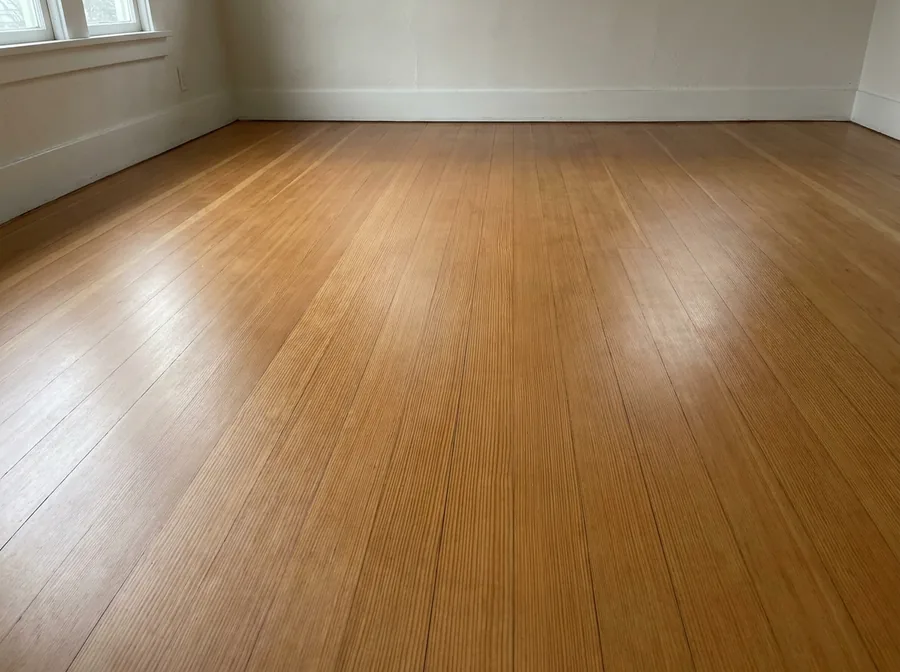
Douglas fir
Native to the Pacific Northwest and under the carpet in a lot of older Seattle homes. Tight straight grain, softer than oak, and worth saving when it is already there.
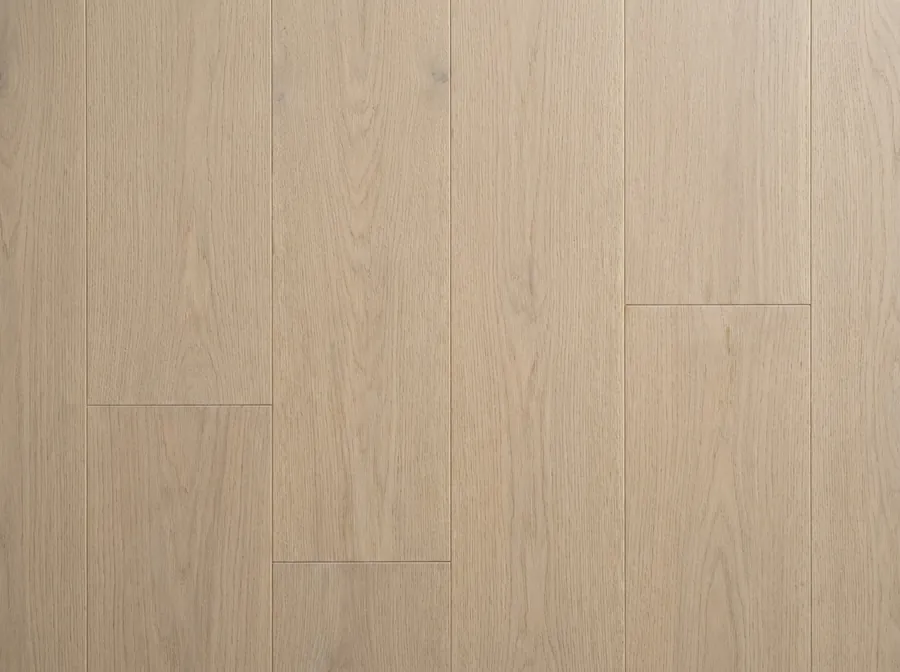
Engineered, wide plank
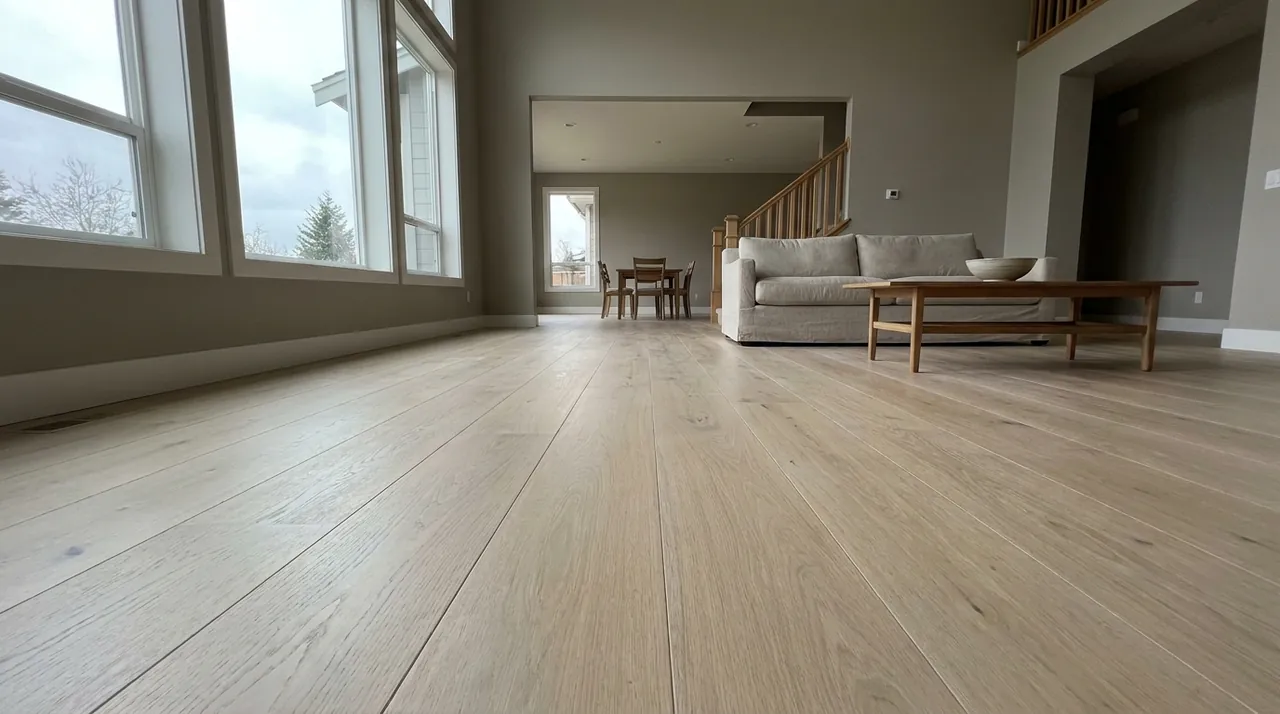
Where a lot of the market has gone. Moves less with humidity and runs 7.5 to 8 inches wide, where solid maxes out around 6 before it becomes a problem.
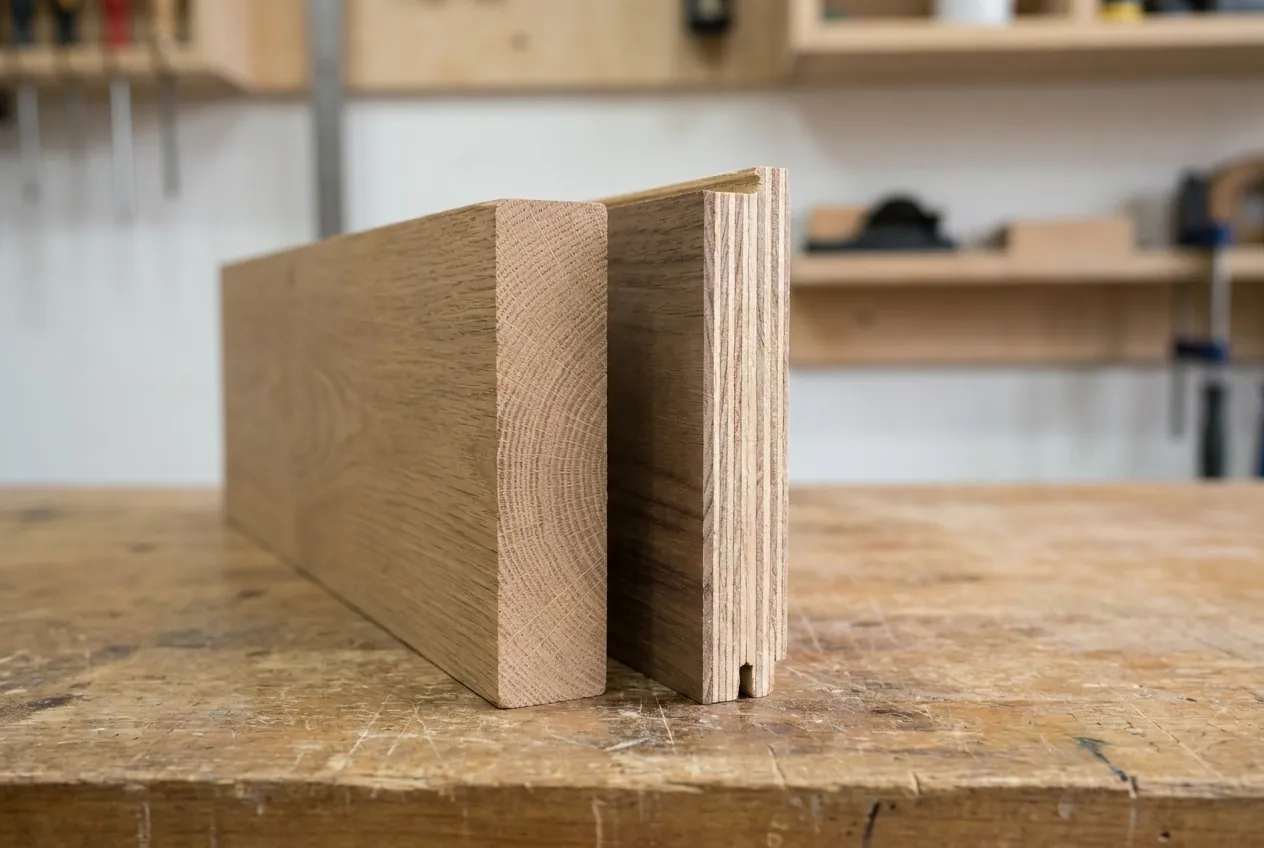
Engineered versus solid
Engineered is about how the board is built, not what it is made of. Solid is hardwood all the way through. Engineered is a veneer of real hardwood, thick enough to sand, laid over stacked plywood layers.
The engineered board moves less with humidity, which matters in this climate, and it lets you run 7.5 to 8 inch planks. Both are real wood on top. Both sand and refinish. The difference matters less than the sales floor makes out.
Prefinished versus unfinished is a different question entirely. Prefinished arrives with the stain and finish already cured onto it, so we install it and you are done. Unfinished is raw: we install it, then sand it, then finish it on site. Two different jobs and two different timelines.
How an install runs
Six steps, the same on every job. You get a real schedule with the estimate, not a range.
Three installation methods, matched to your planks
Which one your floor gets is decided by plank width and what is underneath, not by preference.
Nail down
The boards are fastened straight to the subfloor with nails. The standard method, and the right one most of the time.
Nail and supplemental glue
Glue lets the wider board move without fighting itself, and the nails hold the fastening strength. Wide plank needs both.
Full-trowel glue down
Glue spread across the full surface, because there is nothing for a nail to bite into. Basements, slabs, and anywhere nails cannot penetrate.
On the moisture barrier: under 4 inches a barrier paper goes down under the boards. Over 4 inches, a liquid barrier rolled onto the subfloor before installation. The wider the board, the more moisture matters.
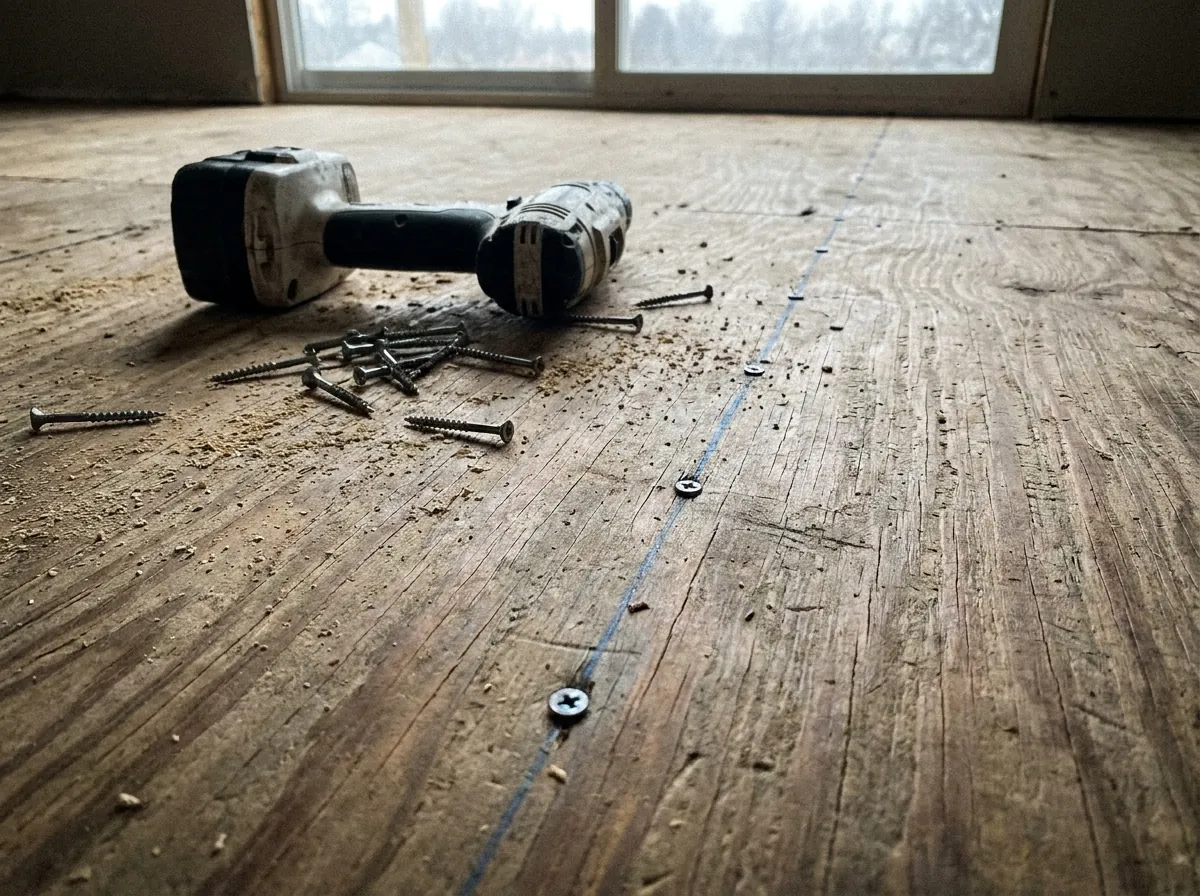
Squeaks, and what is actually under your floor
Most houses built before about 1990 had their plywood subfloor put down with ring-shank nails. The plywood flexes, the nails gradually work up out of the joist, and the floor starts to squeak. Almost everyone blames the hardwood. It is usually the plywood underneath it.
Before I install anything I offer to screw the subfloor down and take that movement out while the floor is open, which costs almost nothing at that stage. Once your new floor is on top of it, the option is gone. I carry the material for it either way, so if I find squeaks mid-job I fix them.
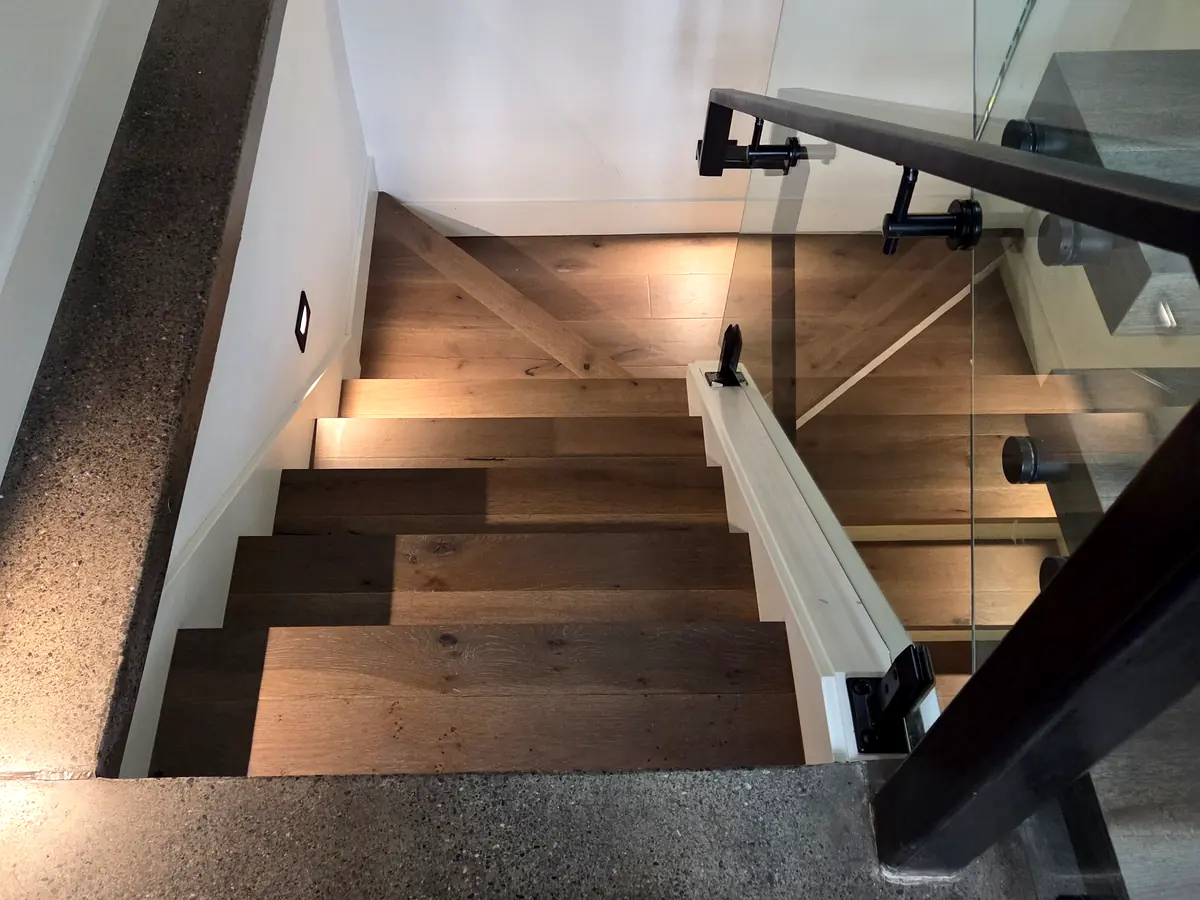
Carpet to hardwood on stairs
Pulling carpet off stairs and putting hardwood on is one of the most common calls I get, and it is a bigger job than it looks. Every tread and riser gets cut and fitted individually. Nosings have to match the floor they connect to. There is no machine that does it, so most of it is hand work.
That is why stairs cost what they do, and why they are worth quoting on their own. If your floors are fine and it is only the stairs you want done, that is a job I will take by itself.
L&I, employees on the books, nothing under the table.
Across every review the business has.
In your home, and free.
Written into the contract, plus the manufacturer warranty.
Questions people actually ask
The ones that come up on nearly every estimate, answered the way I answer them at your kitchen table.
What does it cost to install hardwood floors?
Prefinished or finished on site?
Can you install hardwood over concrete?
Also worth a look
If your existing floors have life left in them, installation may not be the answer at all.
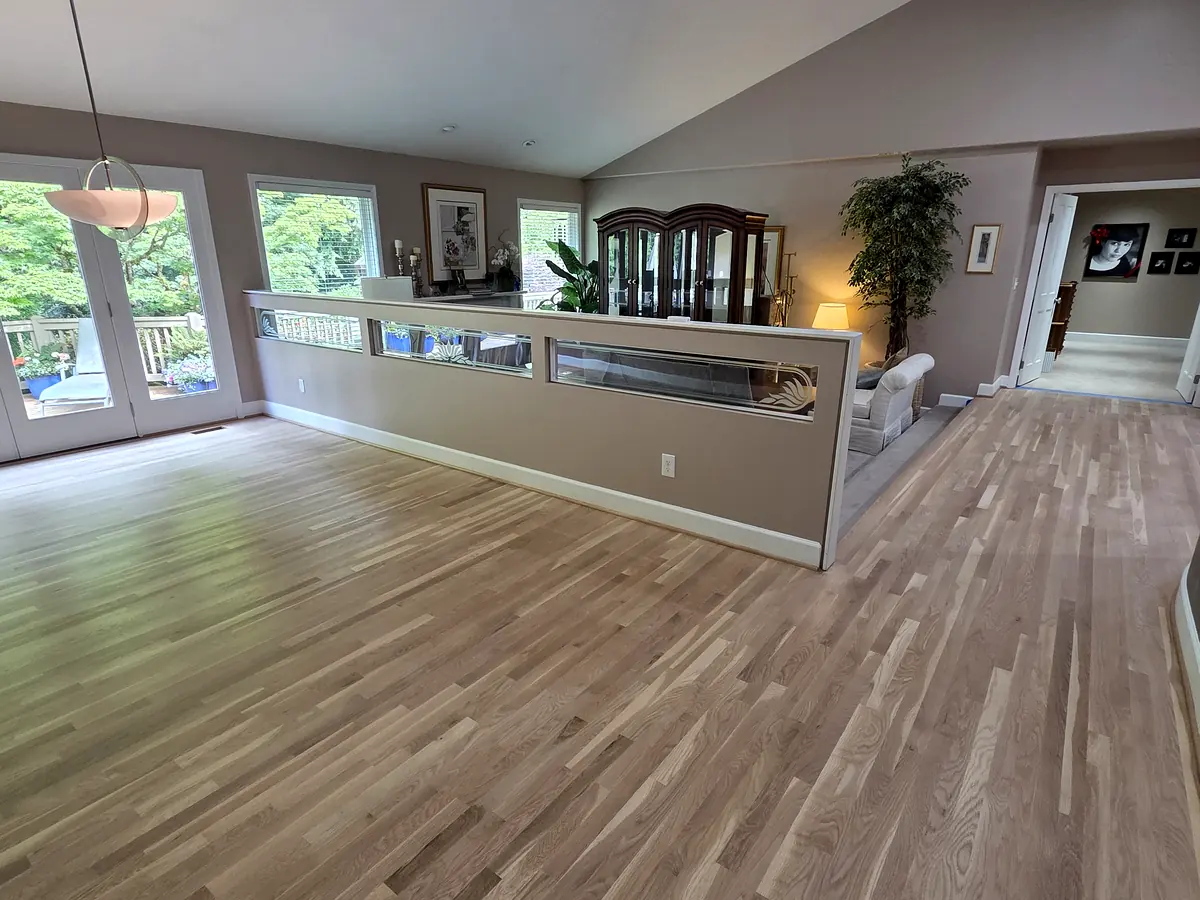
From people who had floors put in
Three of the eighteen reviews on the Google listing, from new installs and carpet that came out.
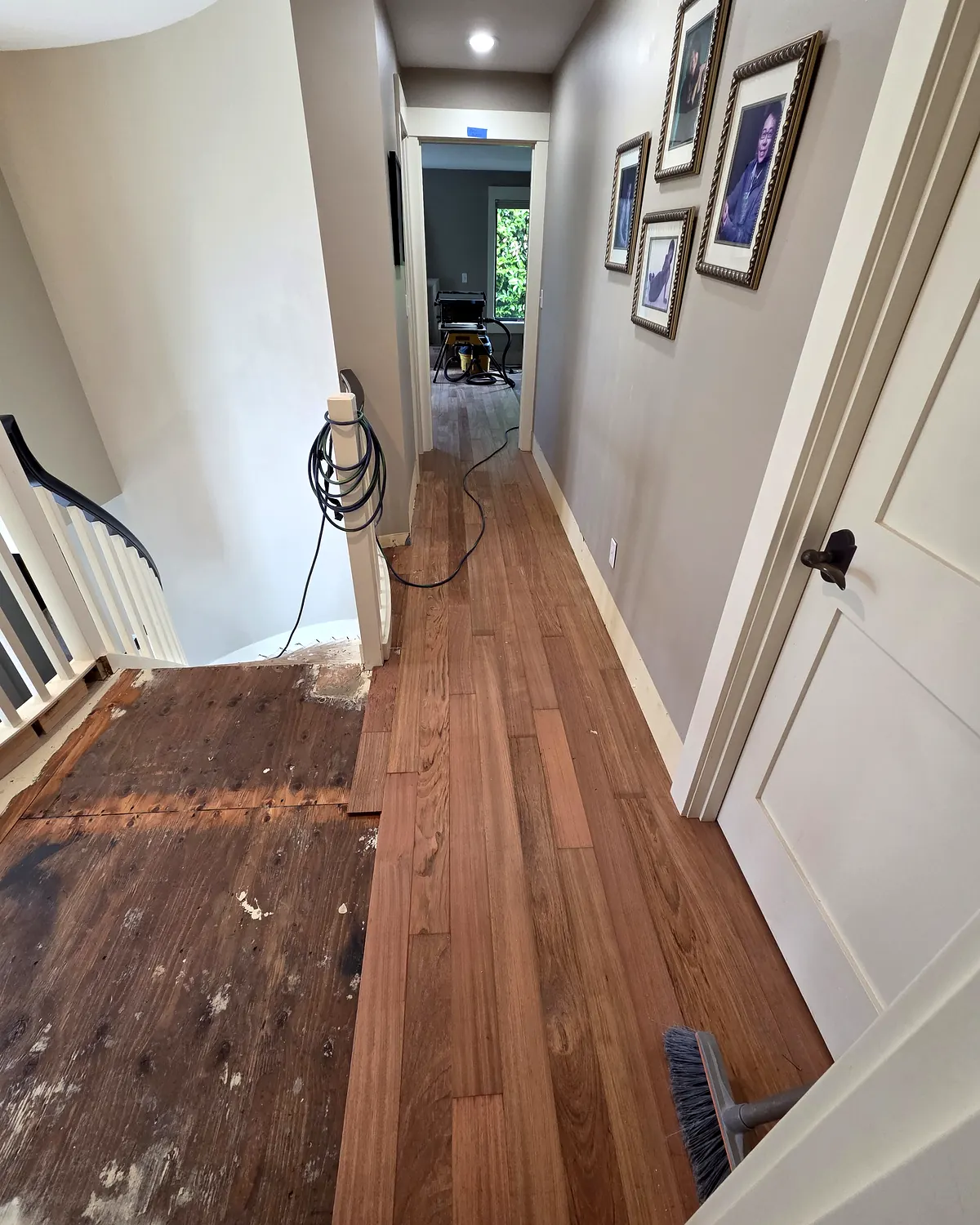
“We had them remove carpet in an upstairs bonus room and put down select red oak with bona finish. Looks amazing! They were always there when they said they would be and were very respectful of our property.”
Jeffrey Sa month ago on Google
“We had new red oak floors installed and existing floors refinished. They flawlessly weaved the new flooring with the old. It is impossible to identify where the old wood ends and the new begins. It's remarkable!!!”
Cindy Seib5 years ago on Google
“We had Greg renovate our existing hardwood floors plus add new flooring in the dining. I could not have asked for higher quality work. The team was professional and outstanding. The new flooring exactly matched the existing.”
James Schmidt6 years ago on Google
Tell me what room you are doing and we will go over your options.
Call or send a few details. I am usually on a job site, so if it goes to voicemail leave one and you will hear back the same day.